Skip to content
+1 617-893-0905WhatsApp
BESSGRIDENERGY

Commercial & Industrial Energy Engineering

Measure the Load.
Control the Peak.
Engineer the Savings.

BESS Grid Energy combines field diagnostics, load-profile analysis, battery energy storage engineering, financing strategy and project execution to help commercial and industrial facilities manage peak demand and modernize energy infrastructure.

UTILITY GRIDCOMMERCIAL / INDUSTRIAL FACILITYCONTAINERIZED BESS · SOC 38%SOLAR (SUPPORTING)

Facility grid draw

980 kW

BESS power

−470 kW

Solar output

120 kW

State of charge

38%

BESS discharges; facility grid draw falls during the targeted window. All values shown are illustrative only — they are not measurements, quotes or projected results for any specific facility.

  • 15+ Years in Energy & Applied Engineering
  • Commercial & Industrial Focus
  • Field-Measured Diagnostics
  • BESS + Controls + Solar Integration
  • Financing & Incentive Screening

Meet this equipment

Most facility teams have never seen a BESS up close. This is what it actually looks like.

A battery energy storage system is physical equipment installed on your own property — outdoors, on a concrete pad, connected between your distribution and the utility meter. It stores energy when it is cheap or plentiful and releases it during the hours that drive your bill. It scales with the site: from a single cabinet to rows of containers.

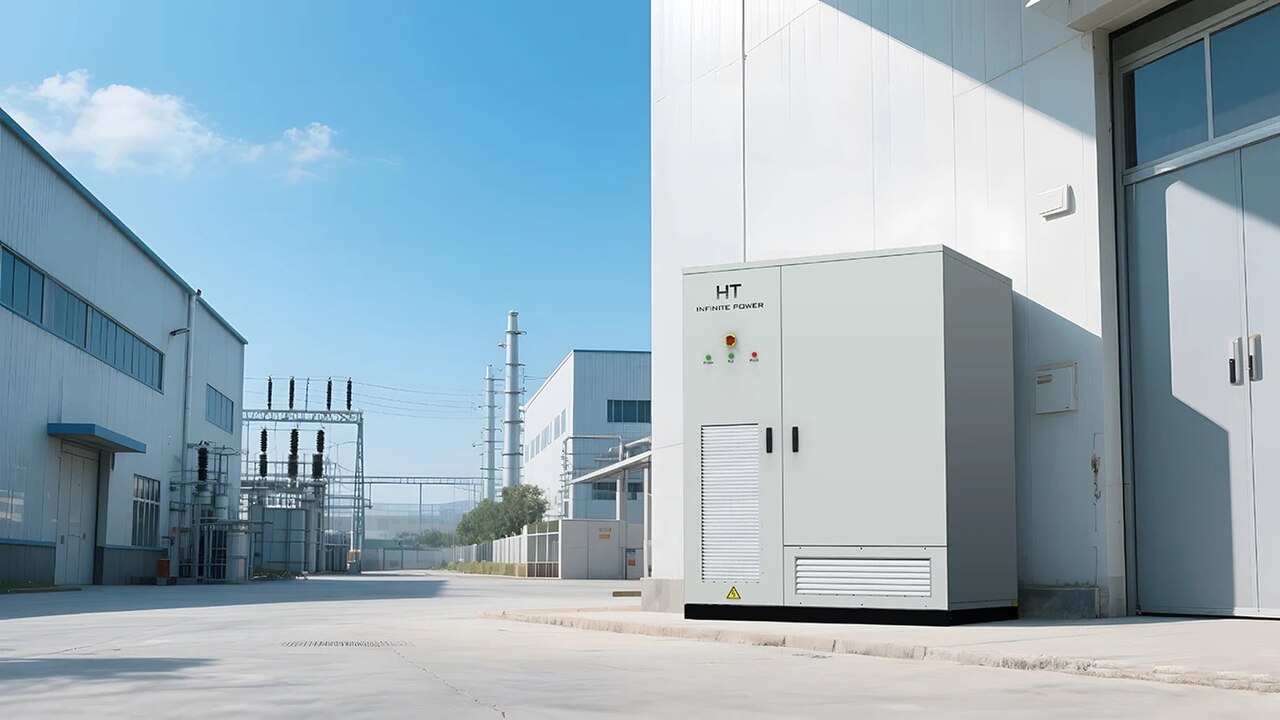
Air-cooled commercial and industrial battery energy storage cabinet installed outdoors beside an industrial building.

Around 100 kW

Compact outdoor cabinet

A single weatherproof cabinet, roughly the size of a large wardrobe, installed on a pad next to the building.

Commercial buildings and smaller plants shaving specific peaks or supporting a few critical loads.

Photo: Yan lance · CC0 1.0
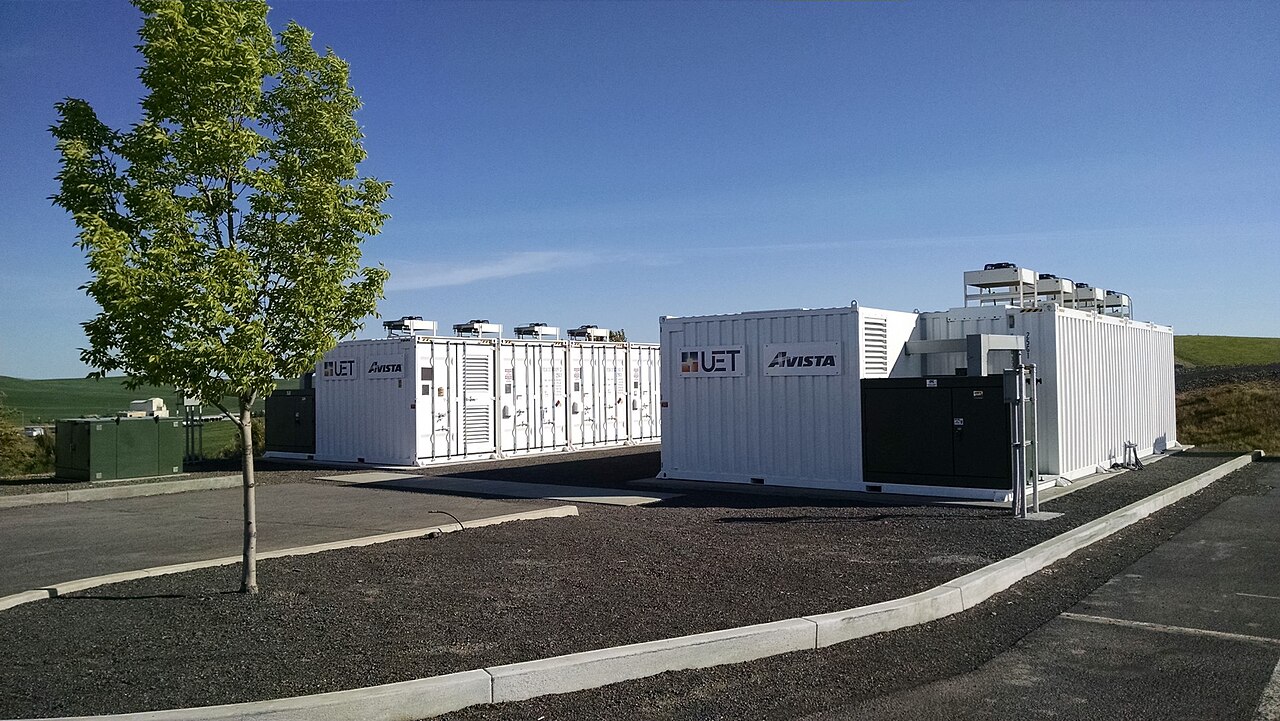
Containerized 1 MW / 4 MWh battery energy storage project with white shipping containers and a power conversion container.

Around 500 kW

Containerized system

Standard 20-foot containers holding the battery strings, plus a separate container or skid for the power conversion system.

Mid-size manufacturing, warehouses and cold storage doing daily peak shaving and load shifting.

Photo: UniEnergy Technologies · CC BY-SA 4.0

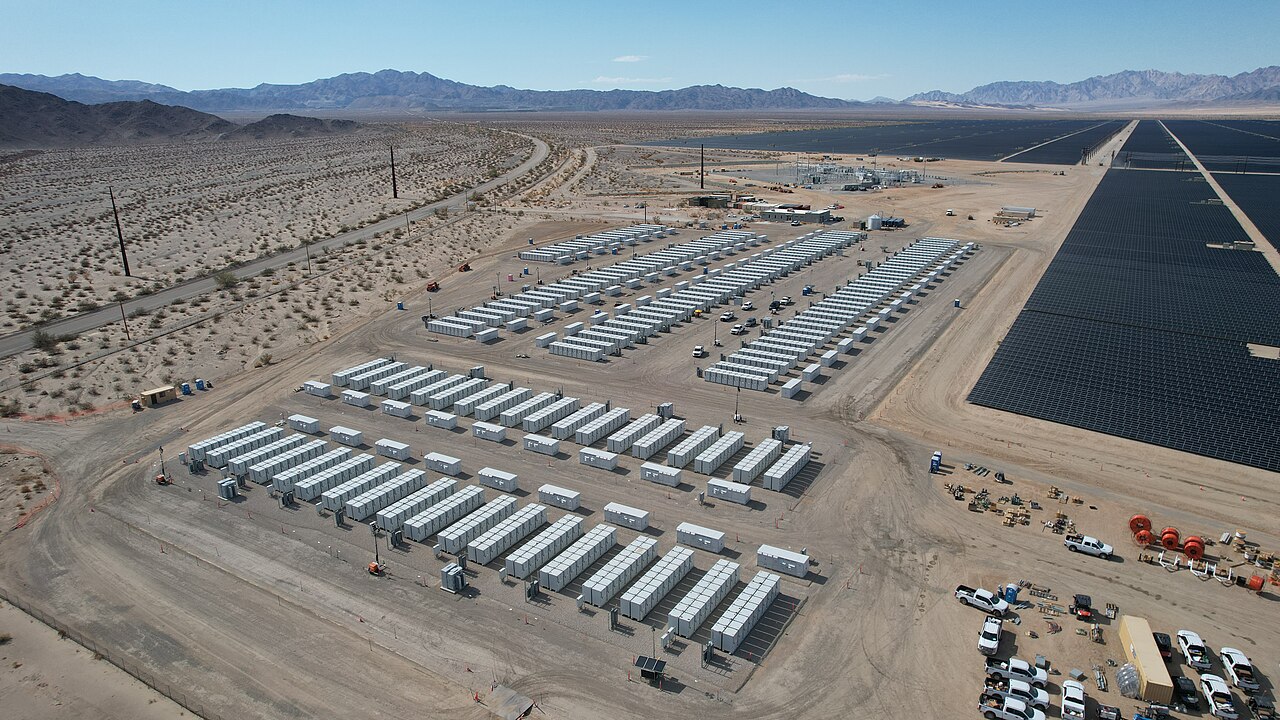
Aerial view of a utility-scale battery energy storage installation with rows of containers next to a solar field.

1 MW and above

Multi-container installation

Rows of enclosures on a dedicated pad, with switchgear, transformers and a control room sized for the site.

Large plants, multi-site portfolios and sites managing demand, resilience and grid programs at scale.

Photo: BLM California · Public domain

Two numbers describe every system. Power (kW) sets how much peak the battery can cut at a given moment; capacity (kWh) sets how long it can hold that reduction. The kW and kWh ranges shown here are illustrative categories, not product offerings — the right size for your facility comes out of the diagnostic and 12 months of interval data.

The photographs show third-party installations published under free licenses. They are examples of equipment types only and do not represent a partnership, resale agreement or representation of any manufacturer, nor a project delivered by BESS Grid Energy.

BESS manufacturers and automation platforms we engineer around

  • Tesla Energy
  • Fluence
  • Powin
  • FlexGen
  • Sungrow USA
  • Energy Vault
  • Stem
  • EnerSys
  • Trina Storage
  • LG Energy Solution
  • Siemens
  • ABB
  • Rockwell Automation
  • Schneider Electric
  • Eaton
  • Tesla Energy
  • Fluence
  • Powin
  • FlexGen
  • Sungrow USA
  • Energy Vault
  • Stem
  • EnerSys
  • Trina Storage
  • LG Energy Solution
  • Siemens
  • ABB
  • Rockwell Automation
  • Schneider Electric
  • Eaton

Manufacturer and platform names are listed as market references only. BESS Grid Energy does not claim partnership, affiliation, authorization or representation of any company named above.

Free Engineering Report

We deliver a free engineering and energy-efficiency report for your plant or facility.
We find the energy losses you can't see.

Engineering diagnostic

Field measurement of your electrical behavior: power quality, demand profile, thermography and load imbalance.

We see what you don't

Energy losses hide in tariff structure, operating gaps, power factor, peak coincidence and aging distribution.

At no cost

The preliminary engineering and energy-efficiency report is free for qualified commercial and industrial facilities.

Offered for qualified commercial and industrial opportunities. The deliverable is an engineering assessment and measurement report — it is not a professional-engineer stamped document.

Free Energy Assessment

Three Days to Understand Where Your Facility Is Losing Energy Value.

A typical onsite diagnostic runs about three days, depending on facility size and complexity. The preliminary assessment is offered at no cost for qualified commercial and industrial opportunities.

  1. Day 1

    Electrical Mapping & Baseline

    Single-line understanding, service entrance, distribution, metering points and the operating baseline as reported by your team.

  2. Day 2

    Measurement, Thermal & Load Analysis

    Power-quality and interval measurements, thermographic inspection, machinery energy profiles and load-imbalance observations.

  3. Day 3

    Validation, Opportunity Map & BESS Feasibility

    Findings validated with your operations team, opportunity map built, and preliminary BESS feasibility and siting review.

Timing can vary based on scope, site access, data availability and facility size. The deliverable is an engineering assessment and measurement report; it is not a professional-engineer stamped document.

BESS Engineering

A controllable asset placed between your load and the utility meter.

A battery energy storage system does not eliminate demand. It is a controllable asset that can reduce facility grid draw during targeted periods — depending on tariff, load profile and project design.

Illustrative demand profile — 24 h

Baseline grid draw With BESS dispatch

Curves are illustrative. Actual behavior depends on the utility tariff, 12 months of interval data, interconnection, equipment selection, dispatch strategy and operating constraints.

Illustrative BESS Economics — not a quote

Explore the relationship between power, capacity and demand charges.

Adjust the inputs to see how rated power, capacity and target reduction interact. Every value below is illustrative.

Inputs

Illustrative outputs

Illustrative avoided demand-charge value
$5,760/mo
$69,120/yr
Power / capacity relationship
2.0 h
Continuous discharge at rated power, before losses and reserves.

Before / after peak demand (illustrative)

Before1,600 kW
After1,280 kW

Reduction delivered: 320 kW across 6 modeled dispatch events per month.

Actual economics require your utility tariff, 12 months of interval or load data, engineering review, equipment pricing, financing terms, interconnection requirements, operating constraints and incentive eligibility. Nothing here is a quote, a savings guarantee, or tax advice.

Solar Integration

Solar Supports the Strategy. BESS Controls the Strategy.

Solar is integrated when it improves charging strategy or overall project economics — not as a default product. Storage remains the controllable element that responds to tariff periods and peak events.

  • Solar time-shifting through storage instead of low-value export
  • Charging strategy aligned with tariff periods and operating schedule
  • Interconnection and site-capacity review for combined systems
  • Controls coordination between generation, storage and facility loads

Where solar fits

We evaluate on-site generation as one input to the dispatch model. If the load profile, available area, interconnection capacity and tariff structure make solar additive, it is engineered into the project. If it is not additive, we say so.

Meet our integration partners

Style Solar Solutions logo

Style Solar Solutions

BESS Grid Energy leads diagnostics, energy strategy and BESS sizing. Integration partners like Style Solar Solutions support solar execution when on-site generation adds value to the project.

Solar is a complementary resource; its inclusion depends on site conditions and project economics.

Talk to an Energy Engineer

Bring us your utility bills and operating schedule. We'll tell you what we can measure, what we'd need, and whether storage is worth engineering for your facility.